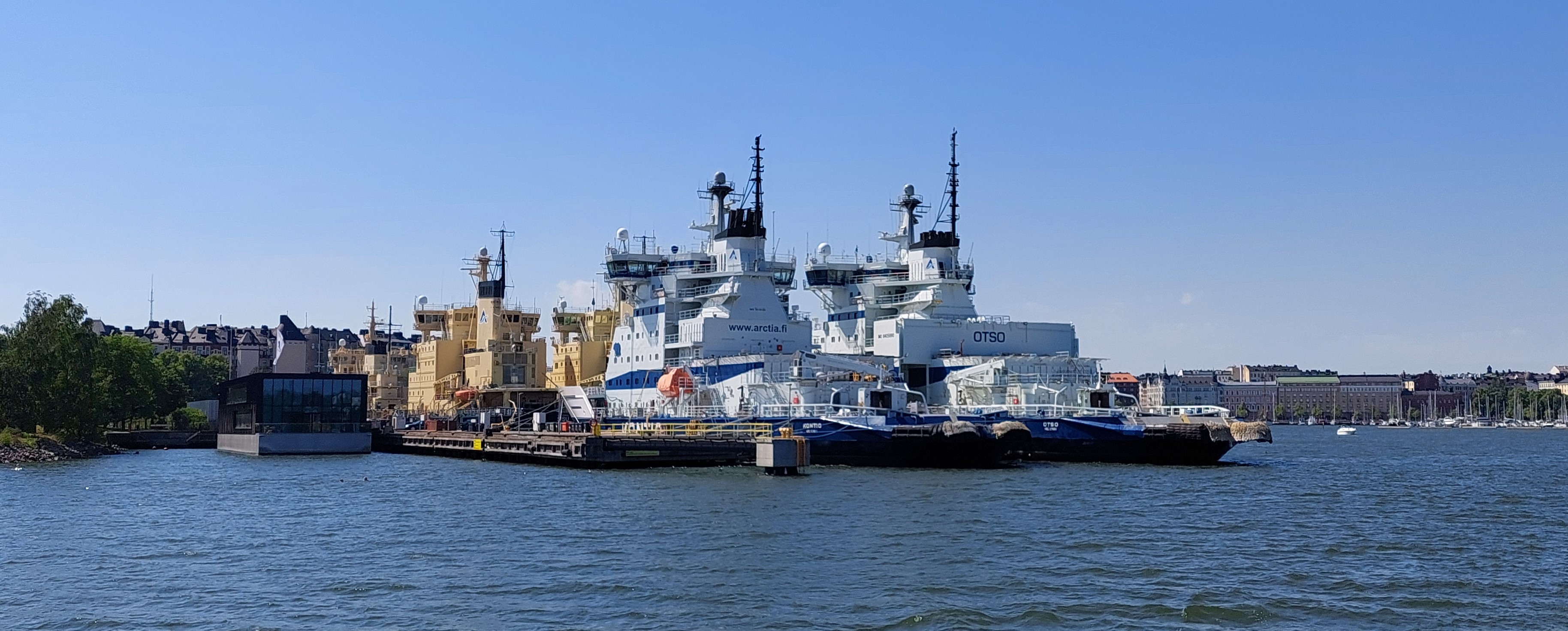
Finland’s fairway dues are high and inequitable; they do not incentivize shipping companies toward sustainabilty in terms of economics or emissions.
What is a fairway due, and how much is it?
In Finland, a fairway due is levied when a vessel arrives at a Finnish port from abroad or moves from one Finnish port to another. The amount of the due is based on the vessel’s ice class (the higher the ice class—meaning the better the vessel’s ability to navigate ice—the lower the due), the vessel type (cargo ship, passenger ship, or cruise ship), and the vessel’s size, measured in net tonnage (NT).
Revenue from fairway dues is credited to the state budget as general revenue rather than being directly earmarked for specific activities. However, the level of the fee has been justified by the costs of services for coastal commercial shipping, such as fairway maintenance, icebreaking, vessel traffic management, and hydrographic surveying. Between 2015 and 2023, the annual revenue from fairway dues was just under €50 million, whereas fairway maintenance costs ranged from €74 million to €114 million—with icebreaking costs accounting for €34 million to €66 million of that total. Consequently, fairway dues had been too low relative to the costs of fairway maintenance. Indeed, fairway dues were nearly doubled starting in 2024, resulting in better cost coverage.
For individual vessels, the current fairway dues range from a few thousand euros to nearly one hundred thousand euros per port call. Cruise ships, which generally do not require icebreaking services at all, pay nearly 40,000 euros per call. A large dry bulk carrier with a low ice class pays nearly 100,000 euros per call, regardless of whether it visits Finland in winter or summer. A large passenger-car ferry with an ice class of 1A Super pays just under 30,000 euros per call.
For passenger vessels, fairway dues are paid only for the first 30 calls of the calendar year, and for cargo vessels, for the first 10 calls. In other words, vessels in regular service pay fairway dues only at the beginning of the year, with the remainder of the year being free of charge. However, this does not apply to cruise ships, which must pay fairway dues for every call, regardless of the number of visits.
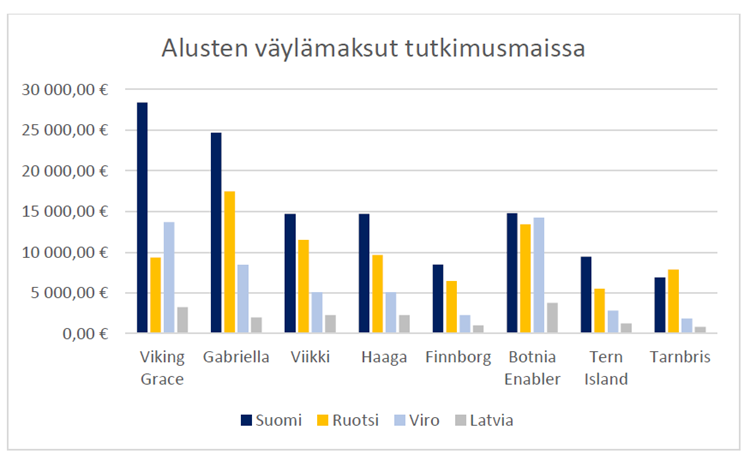
Figure 1. Vessel fairway dues in different countries (first call). Source: Turunen 2026.
Figure 1 illustrates the magnitude of Finnish fairway dues compared to those of neighboring countries. The figure accounts for the initial port calls of the year, after which the fees may drop to zero for the remainder of the year. In Sweden, volume-based discounts are calculated separately for each month. The figure shows that for vessels making infrequent calls in Finland, Finnish fairway dues are the highest—at least for the first visit.
Greenhouse gas emissions from icebreaking
Icebreaking operations in Finland generate carbon dioxide emissions. The annual CO2 emissions of Arctia—the major shipping company responsible for icebreaking—ranged from approximately 32 to 58 million kilograms between 2021 and 2025. This can be compared to the emissions from Finland’s entire domestic shipping sector (i.e., vessels with both their port of departure and port of destination in Finland), which totaled approximately 65 million kilograms in 2019. These icebreaking emissions are not included in the emissions trading scheme for maritime transport.
As early as 1998, Sweden adopted an environmentally differentiated fairway dues system; under this system, the fee for a vessel with a poor environmental rating can be nearly five times higher than that for a vessel with the best rating. The fee is based on the Clean Shipping Index (CSI), which takes into account nitrogen oxides, carbon dioxide, sulfur oxides, and particulate matter, as well as the handling of chemicals and waste. Estonia has also announced a shift to an environmentally based fairway due system. This system is based on the IMO’s Carbon Intensity Indicator (CII), which calculates the amount of carbon dioxide a vessel produces per tonne of cargo transported and per nautical mile sailed. Thus, it measures not only the vessel’s emissions but also how the vessel is utilized in maritime traffic.
Rationalizing Finnish icebreaking operations
Finland’s maritime transport sector is a market characterized by contraction and concentration. Tonnage-based volumes in foreign trade maritime transport are no longer on a growth trajectory; in the current century, volumes have exceeded 100 million tonnes on only a few occasions. Furthermore, cargo volumes across Finnish ports have become concentrated, with the ten largest ports handling over 80 percent of the total tonnage.
The current fairway due system provides no incentive for cost-efficiency or emission reductions. Cargo owners do not need to consider icebreaking costs or emissions when planning their routing. Vessels are offered the same icebreaking service regardless of ice conditions, the port involved, the value or quantity of the cargo, urgency, or available transport alternatives. Nor can icebreaking companies prioritize customers based on their specific needs. Icebreaking services can be requested when the cargo volumes are low, there is no urgency, or an ice-free port could be used instead. Currently, icebreaking is not included in the emissions trading system—but what if, one day, it becomes part of emissions trading, can the icebreaking services be rationalized?
In 2014, the Finnish Ministry of Transport and Communications published an analysis of alternative models for Finland’s fairway dues. These included models where the fairway service level and the applicable dues were based on customer needs. Under such a system, shipping companies requiring a high level of service would pay more—and receive superior service—compared to those for whom the current level of icebreaking (or even a lower level) would suffice. In the long run, this could lead to the specialization of ports and their icebreaking services based on customer requirements. This would enable better targeting of icebreaking operations to meet customer needs and reduce both total costs and greenhouse gas emissions, thereby allowing fairway dues to be lowered.
This column is based on a presentation I gave at an event organized by the Finnish Shipbrokers’ Association on October 8, 2026.
Sources (in Finnish)
Hallituksen esitys eduskunnalle laiksi väylämaksulain muuttamisesta, 2024.
Turunen, Miska: Väylämaksujärjestelmät ja väylämaksujen tason vertailu Itämeren maissa. Opinnäytetyö, AMK, SAMK 2026.
MERIMA – Suomen kansainvälisten merikuljetusten päästöt -mallit. Traficom julkaisuja 11/ 2021.
Jäänmurron toteuttamistapojen vaikutusarviointi. LVM julkaisuja 16 / 2014


