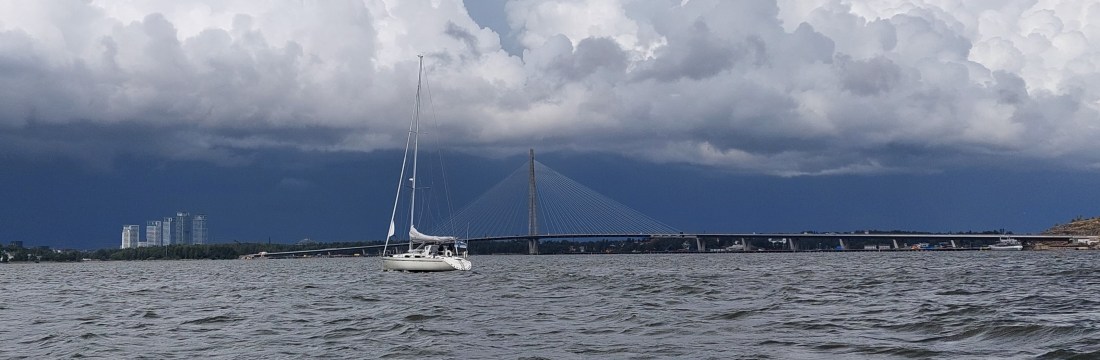
The green transition of maritime transport, where are we now?

The green transition of shipping is not a new thing. As early as 1997, the International Maritime Organization (IMO) beganĀ  a discussion on reducing carbon dioxide emissions from shipping. The first regulation regulating the energy consumption of new ships, called EEDI, came into force in 2011. Since then, the IMO's regulations for reducing greenhouse gases … Continue reading The green transition of maritime transport, where are we now?

Smaller ships are already undergoing significant changes

Regional emission targets effectively guide development towards low emissions My doctoral student Riina Otsason defended her thesis on reducing carbon emissions from ships at Tallinn University of Technology just before Midsummer. Her case study Environmental and Techno-Economic Assessment of Decarbonization Pathways for Ships Below 5,000 GT focused on urban and archipelago shipping vessels and other … Continue reading Smaller ships are already undergoing significant changes

The Strait of Hormuz Blockade Has Caused a Global Energy Crisis

The Economist, one of the world’s leading business magazines, wrote a few weeks ago: ā€œWhatever happens in the Strait of Hormuz, energy markets have been changed for everā€. The Strait of Hormuz separates the Persian Gulf from the Indian Ocean. In The Persian Gulf are located the export ports of major oil and gas exporters … Continue reading The Strait of Hormuz Blockade Has Caused a Global Energy Crisis

What did Finland’s maritime transport volumes look like in 2025?

The Finnish economy is highly dependent on world trade. Due to country’s geographical location, maritime transport is the most significant form of transport – especially now that trade with Russia has decreased significantly. Finland’s foreign trade in 2025 was 233 billion euros, of which almost exactly half were imports and half were exports. Of these … Continue reading What did Finland’s maritime transport volumes look like in 2025?

About the economic assessment of transport connections

Should a high-speed train be built to Turku? What about a bridge from Turku to Stockholm? Or a train ferry to Tallinn? Questions like this are raised in the public, and expert reports on the economic profitability of transport connections seem to be contradictory. How can we understaind all this? Over the decades in my … Continue reading About the economic assessment of transport connections