Regional emission targets effectively guide development towards low emissions
My doctoral student Riina Otsason defended her thesis on reducing carbon emissions from ships at Tallinn University of Technology just before Midsummer. Her case study Environmental and Techno-Economic Assessment of Decarbonization Pathways for Ships Below 5,000 GT focused on urban and archipelago shipping vessels and other smaller vessels that, due to their size, are not subject to the greenhouse gas regulations of the International Maritime Organization (IMO) or the European Union (see Quick Guide to Maritime Greenhouse Gas Emissions Regulations). The study covered urban shipping, archipelago shipping vessels, pilot boats and even parafoil solutions (see Will the ships of the future fly?).
Local regulations may be stricter
The opponents asked why Otsason studied such ships, even though they are small in size and therefore not subject to increasingly strict international environmental laws and regulations. Why are smaller ships already undergoing significant changes towards lower emissions around the world, especially in northern Europe, regardless of international regulations?
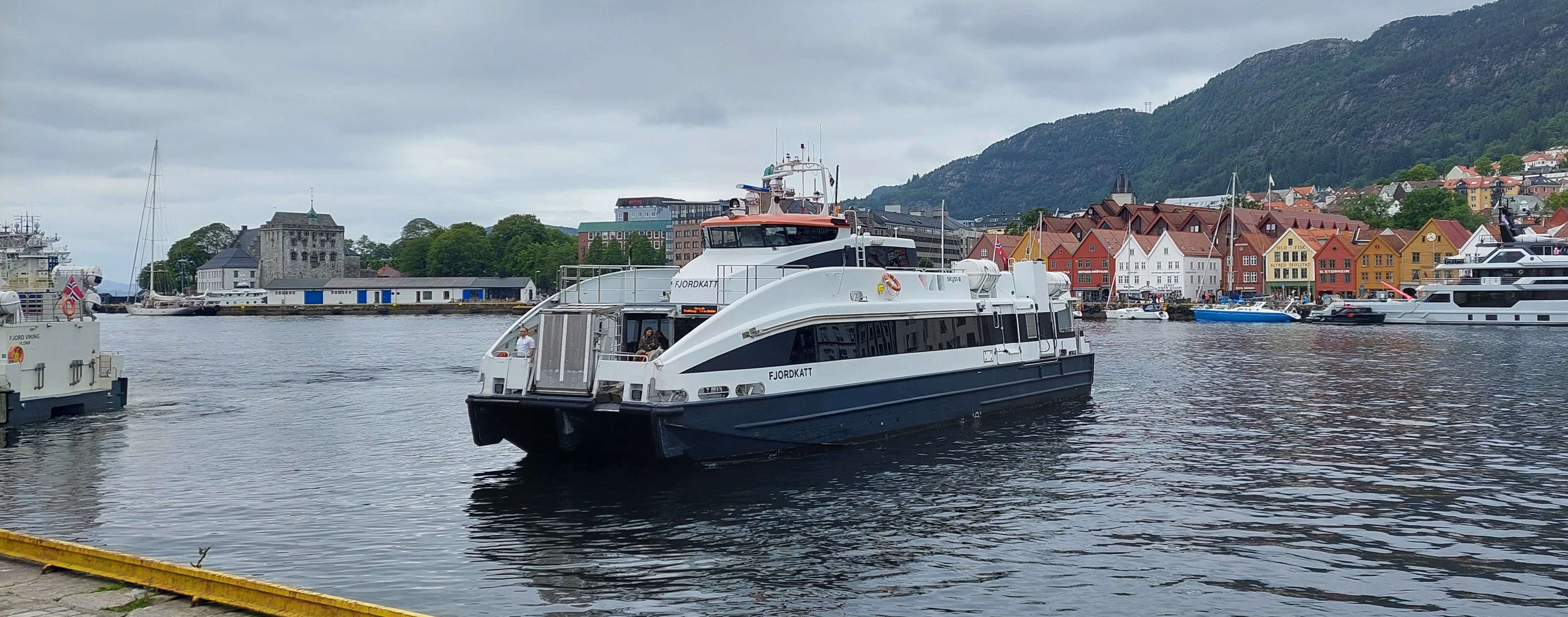
Regional regulations are already guiding smaller ships towards low emissions. Cities, municipalities and states have their own targets for achieving carbon neutrality. Since municipalities and individual states do not have to engage in extremely difficult international negotiations on emission reduction targets for their own territorial waters, their targets are often already stricter and the transition periods shorter than in international shipping. Emission reductions from smaller ships therefore play a role in achieving these regional targets.
While the EU emissions trading scheme does not apply to city or island connecting vessels, a large proportion of new city and archipelago ferries in Europe are already being built as hybrids or fully electric. On the other hand, the sector is new, the technology is often still in the development phase, and many archipelago and road ferries are a kind of pilot, where, for example, electricity supply and charging must be designed on a case-by-case basis using technology that has not been tested in all conditions.
Each low-emission vessel needs its own study
The results of the research state that reducing emissions cannot be viewed from just one perspective, but must take into account the entire system (markets, infrastructure, regulations), the ship’s operational activities (speed, route, schedule, maintenance, IT systems) and the ship’s technology (hull, propulsion, machinery, fuels and energy system). All of these together affect the ship’s emissions, economy and operational efficiency. In practice, each low-emission vessel requires its own studies, and the measures cannot be copied as is.
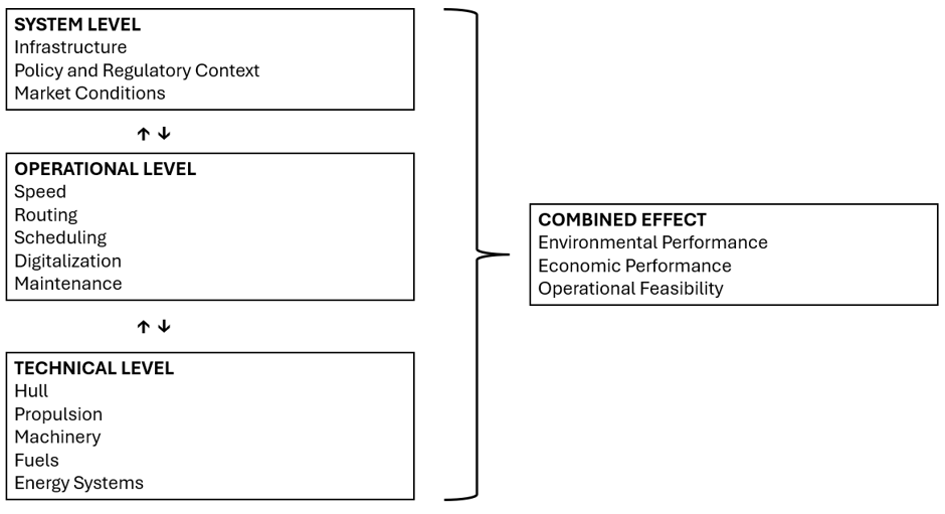
Figure 1. Perspectives on reducing ship emissions. Source: Riina Otsason, doctoral dissertation 2026
The environmental perspective is part of strategic planning
You often see discussions where ship emissions are considered from only one of the above-mentioned perspectives, for example through alternative fuels. Shipping companies and ports are confused when the calculations give such different results for different ships and under different conditions. For this reason, the environmental perspective cannot be separated from the strategic thinking of shipping companies. While monitoring the market situation and regulation, planning schedules and speeds or building new IT systems, the emissions of the actual operations must also be calculated.
More results of the research group
Riina Otsason’s work was the second doctoral dissertation of our five-year-old research group on reducing ship carbon emissions. Six months ago, our group’s first doctoral dissertation, Andres Laasma’s work, focused exclusively on Saaremaa ferry traffic. The next four dissertations will then focus on port operations from different perspectives: calculating greenhouse gas emissions, digitalization, the eutrophication effect of fertilizer loading and wastewater, and the final dissertation on the resilience of ports.
The thesis will probably be completed within the next year or two, although it is still difficult to estimate the exact timetable. However, interested readers can already find the results in public and peer-reviewed scientific articles. I will also summarize the most important findings in my blogs after each dissertation is completed.
Stay tuned!
The article was previously published in Finnish in Navigator Magazine, an online magazine for maritime professionals, on June 23, 2026.


