Should a high-speed train be built to Turku? What about a bridge from Turku to Stockholm? Or a train ferry to Tallinn? Questions like this are raised in the public, and expert reports on the economic profitability of transport connections seem to be contradictory. How can we understaind all this?
Over the decades in my work, I have calculated the profitability of many transport connections, like the Tallinn-Helsinki Tunnel, various railway lines, such as Rail Baltica, and several potential shipping lines. As an EU expert, I have assessed potential infrastructure projects across Europe and have even been involved in comparing potential Hyperloop projects.
There are basically three different ways to calculate the profitability of a transport connection, and they should not be confused with each other. I will outline them roughly below.
Commercial profitability
The clearest way to calculate the profitability of a new transport connection, for example a ferry or bus line, is to calculate 1) the income, i.e. the estimated future paying customers and the cash flow they bring, and then subtract 2) the costs, i.e. the operating costs and the investment in the means of transport and possibly the required infrastructure, with their payback periods.
It is worth noting that these plans usually use existing infrastructure: tracks, roads or ports. The basis of the analysis is the idea that the company will use existing the infrastructure and will not have to pay for the route itself, except perhaps some user fees.
I have noticed that these calculations unfortunately often forget the competition. There may be customer potential, but planners do not often consider why customers would be willing to switch to another route or mode of transport. Would the price of the new transport connection be cheaper, would the route be faster and would the service offer be better? If this is not the case, customers will hardly switch to the route, and the transport connection will not be economically viable.
For example, over the years I have calculated numerous options for train ferries to replace the current passenger and car ferry service between Tallinn and Helsinki; or another ferryline with alternative ports in the Gulf of Finland. The frequency of the Helsinki–Tallinn line is high, trucks on the ship are a flexible form of transport and the price level of the line is very competitive. At least I have not yet come across a proposal for a shipping line that could compete with this line in terms of flexibility, speed, frequency or price.
The most disturbing are the calculations that do not even know who the competitor is. For example, the real competitor of taxis is often not another taxi entrepreneur, but passengers’ own cars: a customer who has only an occasional need to get around ends up buying a car instead of using a taxi. This sets limits on how much a passenger is willing to pay for a taxi.
Socio-economic profitability
There are also projects whose benefits do not increase financial income. For example, a new level crossing for trains improves safety and speed, but it does not increase revenue on the line in question. Or, transferring passengers to trains reduces emissions and noise. In these case, socio-economic benefits are calculated.
In socio-economic calculations, the impacts of a transport connection are examined broadly. These include faster travel times, reduced traffic accidents, environmental impacts, human health, accessibility of services, land use and regional development, and even the employment impacts of construction.
When it comes to a project that requires investment in new infrastructure, such as a road, railway or port, the construction takes years or decades and the business profitability calculations described above will never make the transport connection profitable. That is why the most significant transport projects also involve public funding: the municipality, the state or the EU.
In my own work, I have often noticed that the weighting given to speeding up travel, reducing pollution, noise pollution, employment impacts and especially the internal rate of return used in the calculation greatly affects the final result. Therefore, these socio-economic calculations should never be assessed on the basis of just one figure, but rather carefully examine the assumptions on which the assessments are based.
Wider economic impacts
New transport connections also produce benefits that only become apparent over several years or decades. These include, for example, increasing sales revenue for companies, increased regional productivity, expanded labour markets, increased skills of workers, increased value of land and buildings, growing demand for business premises and housing, increased tax revenues and wage income, increased services and the attractiveness of residential and industrial areas.
The wider economic impacts of a transport corridor project therefore refer to significant impacts that do not emerge in the calculation of socio-economic benefits and often only become apparent over a long period of time. The open-minded reader will notice that in these major projects, the above-mentioned broad economic impacts arise primarily from the movement and activities of people; for goods, a slower older route is almost always sufficient.
History tells us that the larger a city, the greater its productivity has grown through the division of labor, greater resources and specialization. Large transport projects that connect cities enable just such long-term economic growth (see Figure 1).
There are several methods for examining these broader economic impacts, but unfortunately they contain many uncertainties, and therefore their use is usually limited. Often, we end up describing them only in words. It is difficult to give precise profitability estimates for such megaprojects, but their profitability can be compared with each other when the same principles are used in calculating different alternatives.
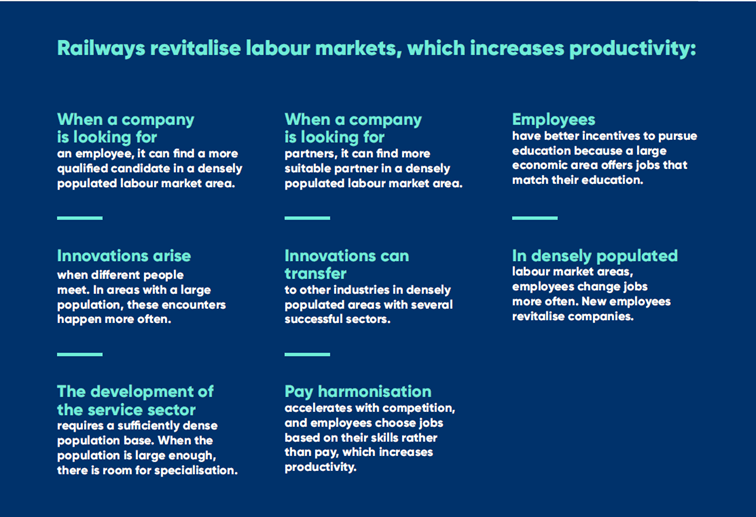
Figure 1. Wider economic impacts (Source: Nordic Capitals Railway https://miltton.com/wp-content/uploads/2025/12/Nordic_Capitals_Railway_EN_08122025.pdf)
In summary: Can we compare a new ferry line from Kotka to Sillamäki, a tram line in Vantaa, an Hour Train to Turku or a Helsinki–Tallinn tunnel with each other? Absolutely not, as the impacts of all these projects are different.
But when we identify which of the three categories the transport connections we are considering falls into, we can consider the benefits from a perspective of a few years, decades or even a hundred years and compare alternative projects with each other and with the available financial resources.
On the other hand, it should be remembered that every cost estimate is only a tool for decision-making, and every method of calculation always contains uncertain assumptions. The final decision must always also include a reflection on the direction in which we want to develop the transport network.
The article was previously published in Navigator Magazine, an online magazine for maritime professionals, on January 23, 2026.

 Tales of Talsinki