A recent doctoral dissertation on the digitalization of passenger and car ferry ports raises more questions than it answers. At the same time, it shows that the digitalization transformation of ports is only just beginning, if at all.
Last week, doctoral candidate Yiran Chen Zhou’s dissertation was examined at Åbo Akademi. The thesis examined how digitalization is changing Ro-Pax port ecosystems. The study examined six Ro-Pax ports, the names of which were not disclosed, but I suspect that they are well-known passenger and car ferry ports in the Baltic Sea.
The defense itself turned out to be more interesting than the dissertation, as candidate Yiran explained the background and her findings. In port discussions, we often talk about tons, TEUs and passenger numbers, but in this work, the focus was primarily on services, and the underlying expertise and skills with which the port creates added value for the customer.
At the beginning of the work, she reviewed what digitization, digitalization and digital transformation are. Digitization means transferring manual operations almost as they are to a digital form, for example, a ship’s manifest is no longer a handwritten or typewritten and copied document, but rather an extract from the ship’s information system. Digitalization means the use of new digital tools, such as planning a ship’s cargo plan or passenger cabin reservation systems, and generally the exchange of digital information between different actors.
Digital transformation means changing a company’s strategy using digital systems, as we see, for example, in the development of our mobile phones. Nowadays, a phone is mainly a platform on which we install applications made by other actors. As a result of digital transformation, major changes often occur in industries, and large giants may have to give up when a competitor completely changes the structure of the industry – we all remember what happened to Nokia.
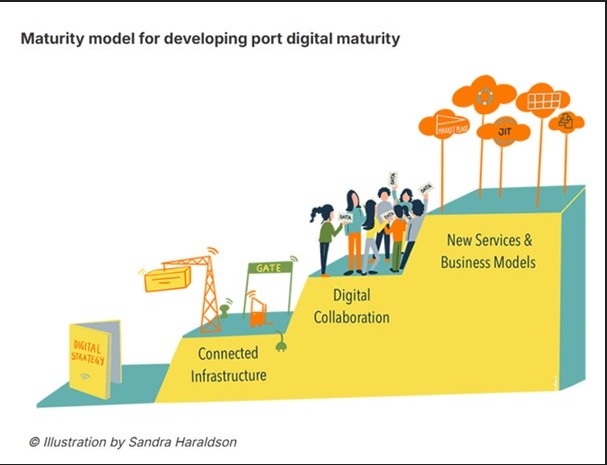
Figure 1. Model of the development of port digitalization Source: untad.org
Chen Zhou listed the new or relatively new digital tools of the six passenger and car ferry ports he studied. Each of the ports examined uses a digital port traffic control system, which aims to reduce congestion and traffic-related inconveniences in the city. In addition, the ports have automatic check-in systems, services that provide onward connections for passengers, monitoring and optimization of the use of port areas, security systems, control and monitoring of passenger and cargo flows, and 3-D modeling or digital twins. Three ports had started or were about to start a new digital director. The goals of the digitalization change were to improve efficiency, but also to improve logistics chains and safety and reduce harmful environmental impacts.
Shocking news of the thesis was that, based on the research of candidate Chen Zhou, the ports under review are still only on the second step of this staircase, i.e. digitalization and cooperation, and only in the future will we be able to – perhaps – begin the digital transformation of the sector. Overall, the systems were separate and focused on individual problems, and the entire idea of a digital port had not yet been utilized. The study shows that despite several Port Authorities are preparing their digitalization strategies, they implement solutions without a strategic approach. The current digitalization process is fragmented which leads to a ’digital mess’. In other words, what many other industries already have today has yet to begin in passenger and car ferry ports.
I asked candidate Chen Zhou why passenger and car ferry ports have not yet begun the digital transformation. He mentioned a problem that has also emerged in other studies, that port ecosystem operators often do not see the benefits of digitalization or digital transformation for themselves, and therefore the required development projects and investments are not made. Another problem in most of the ports in this study was their small size and lack of resources. Zhen Chou suggests that ports themselves could act as providers of digital services to companies in the port ecosystem. We also considered for a moment whether there would be a place for national cooperation here, for example through the national NEMO system.
Finally, I asked the doctoral candidate what ports should do, as the total volumes of Finnish ports have fallen almost every year since 2018 and in Estonia since 2021. Is it even possible to renew business and improve the added value of services offered to customers during declining volumes? Chen Zhou replied that the concept of a port should be expanded, ports could produce more experiences for passengers and value-added services for freight traffic. On the other hand, Chen Zhou announced open data and cooperation with, for example, start-up companies that could renew service offerings of passenger car ferry ports – see an example of the Singaporean start-up ecosystem.
Source: Chen Zhou, Yiran: How Does Digitalisation Affect Value Structure? : A Case Study of RoPax Port Business Ecosystems. 2025.
The article was previously published in Finnish in Navigator Magazine, an online magazine for maritime professionals, on November 28th, 2025.

 Tales of Talsinki