The security of supply for Finland’s foreign trade in the era of shrinking budget funding requires management of the entire supply chain, increasing the competition of ports and cooperation with our neighbors Sweden and Norway.
We are now thinking about how to make the next 12-year transport system plan. The challenge is great. How to take care of Finland’s foreign trade and security of supply when no additional money is coming?
I have divided my presentation into three themes: supply chains, sea transport and ports, and security of supply.
Supply chains are long and vulnerable – the solution lies in supply chain management
The dependence of Finnish society and business on imported products, semi-finished products and raw materials has increased considerably over the past decades. At the same time, our ability to manage supply chains has decreased.
The reasons for the change can be divided into three groups:
1. Production has moved further and further away to countries with cheap production, further away from Finnish control.
2. Products increasingly consist of parts and components, each of which can be made in a different country from different raw materials. The lack of any part or component can bring the entire complex supply chain to a standstill.
3. According to just-in-time thinking, unnecessary stocks have been filed away from productions, i.e. entire supply chains have become more sensitive to disturbances.
Security of supply can be ensured in many ways. Traditionally, delivery reliability has been increased with large warehouses. In addition, we can also reduce dependence by e.g. changing consumption habits, using more subcontractors, planning alternative products, predictability, moving the order point to the last possible moment and reducing wastage. Other tools for managing supply chains are capacity flexibility, scheduling changes and time buffers, and speeding up the flow of information from demand to production.
In order to ensure security of supply in shipping, for the fleet, contract arrangements with shipping companies in times of crisis can also be considered. The key is in developing business models.
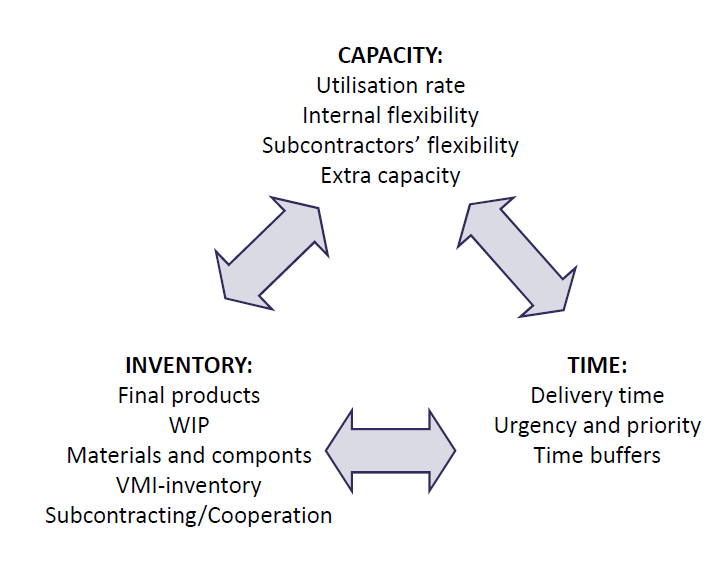
Figure 1. Management of uncertainty in supply chains (photo: Marja Blomqvist, QDC)
Companies are innovative in ensuring security of supply. In 2011, we studied, among other things, how companies prepared for the stoppage of sea transport in the 2010 port strike (Yliskylä-Peuralahti et al. 2011). The operating models of the companies varied: companies increased their inventory levels before the strike, changed or postponed the completion times of their products, changed modes of transportation or transportation routes, and even moved their production outside the strike area. In extreme cases, they even bought products from their competitors to fulfill their customers’ needs.
Finland’s sea transport is decreasing, but more and more efficient logistics are still needed – infrastructure must be reduced and more space must be given to port competition
In 2022, Finland’s foreign trade by sea was 95 million tons. The amount varies every year, but in practice over the past 20 years foreign trade by sea has remained at the same level.
In the future, sea transport volumes will decrease with the green transition. About 39 percent of Finland’s maritime imports in 2022 were coal or oil. That is, one fifth of all our foreign trade by sea is currently fossil fuels. With the green transition, the reduction of fossil fuels alone means a significant reduction in the amount of sea transport.
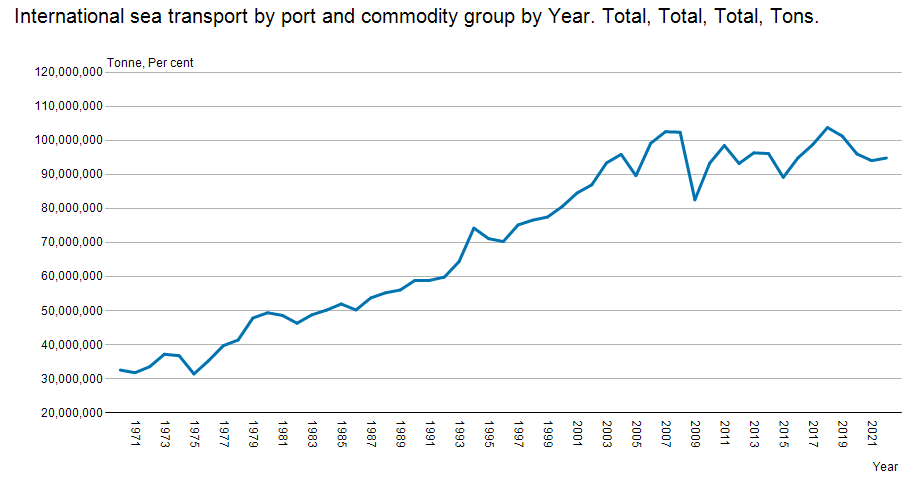
Figure 2. Finland’s foreign trade by sea (source: Statistics Finland, Statfin).
In 2022, only a good half of the value of Finnish exports was transported by sea. The value of Finland’s goods exports in 2022 was 87 billion euros and the value of service exports was 32 billion euros – in other words, the share of services was 27 percent. The share of physically transported goods was only 73 percent of the value of our country’s exports.
It is remarkable that only 80 percent of the value of goods exports goes by sea – the rest goes by air or road, for example. In other words, less than 60 percent of our exports are transported by sea (55-58% depending on the statistical source), the rest is service exports and other forms of transport. We also see that, for example, the share of the forest industry in our country’s export earnings is about ten percent.
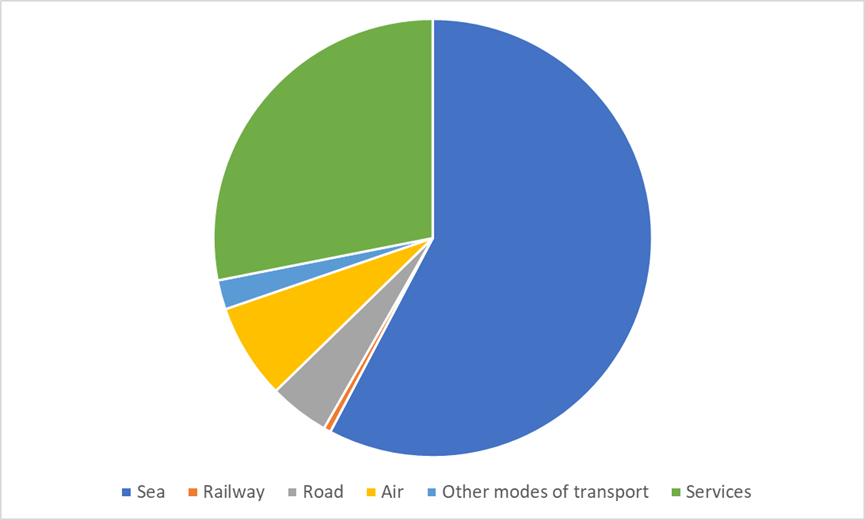
Figure 3. Finnish exports by mode of transport (euro)
If we look at Finland’s export and import volumes in tons by port, we can see that 45 percent of exports go through seven ports and 45 percent of imports go through seven ports. However, there are more than 50 ports in Finland to which the state provides both sea and land connections. In addition, there are twenty so-called winter ports in our country, where icebreaking service is offered.
Finnish ports are facing big challenges. In order to make customers’ operations more efficient, ports must invest significantly in digitization and control of supply chains. Tightening environmental regulations require ports to invest not only in the collection of waste and wastewater, but also in new distribution infrastructure for low-emission fuels. These changes require a lot of investment and money.
We know from research that the background of Finnish ports varies, several ports serve the entire country’s export and import transports. On the other hand, the population and production activities of our country are very concentrated to the south, the so-called to the growth triangle. The geographical center of Finnish settlement is located in Hauho and the production center in Riihimäki.
The sad truth is that only those ports with enough cargo are able to invest in the challenges of future digitization and low carbon emissions. Ports should be given more power to improve their operations or, alternatively, even stop them if they are unable to meet the increasing challenges.
The model of harbors’ channel maintenance responsibility would mean increasing the ports’ responsibility for breaking ice in the fairways and archipelago lanes. The state would continue to be responsible for open sea ice breaking at pilot sites. In this case, the best icebreaking service would be offered where icebreaking is most needed – such as in the port of a major industry or city – and costs would be saved where the demand for icebreaking service is less. The final decision on supported ports would therefore be up to the users of the ports, the Finnish export and import industry, not the government. In other words, the ports that the industry itself wants to use would succeed in the competition, and the less attractive ones would have to reduce their service offering. In the long term, competition would lead to more efficient use of the remaining port capacity and lower investment costs.
Sea transport is not the weakest link – it is still worth developing Narvik’s connections
Even though it was stated at the beginning that the worst threat to the security of supply in Finland’s foreign trade is not the maritime connection but the management of the entire supply chain, attention must still be paid to the maritime transport connections.
In the spring of 2023, Confederation of Finnish Industries published a great report made by Destia, which examined the vulnerability of Finland’s maritime transport links. Reassuringly, the share of domestic production in the grocery trade is very large: 80 percent, so we are not in a challenging situation. The absence of sea transport would create a bigger problem for industrial exports and imports.
However, we are connected by land to both Sweden and Norway. The North Atlantic is also connected to both Narvik and Trondheim in the north. Currently, there is already a connection to the port of Narvik for Finnish containers, but the use is low. The capacity of these train connections must be increased. The key to that is security of supply cooperation with Sweden and Norway.
In summary, security of supply for Finland’s foreign trade in the era of shrinking budget funding requires management of the entire supply chain, increased competition of ports and cooperation with our neighbors Sweden and Norway.
This text combining my previous blogs is based on my presentation at the Ministry of Transport’s Liikenne12 plan workshop on August 30, 2023.

 Tales of Talsinki
thank you for publishing your research in English for the benefit of the members of the American Maritime Congress and Transport Institute sponsors of the New York Maritime Security Conference.
LikeLike